
Map-Based Dating: Why Location-First Beats Swipe-First
Endless swipe feeds are exhausting and gamified. Here's why location-first dating apps like Mapdate — where you see real people on a live map — create more authentic, faster connections.
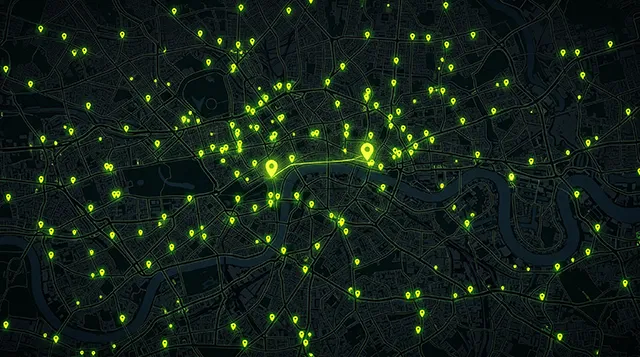
If you’ve spent any time on Tinder, Bumble, or Hinge in the last few years, you know the feeling: an endless stack of profile cards, a reflexive flick of the thumb, a dopamine drip that somehow leaves you more exhausted than excited. The swipe mechanic was revolutionary in 2012. In 2026, it’s a chore.
Location-first dating — where the live map is the core interface, not a secondary filter — is a fundamentally different proposition. Here’s why it works better.
The Problem With Swipe-First Apps
They turn people into products
When your profile is one card in a stack of 200, you’re competing for a split-second of attention. Users optimise for the algorithm, not for genuine self-expression. The result is a sea of mirror selfies, gym photos, and carefully curated highlight reels that tell you nothing about what it would actually feel like to grab a coffee with this person.
Distance is an afterthought
Traditional swipe apps let you set a radius, but proximity is still just a filter on top of a photo feed. You might match with someone 40 km away and spend two weeks texting before either of you bothers to suggest meeting. Physical proximity should be a starting point, not a filter.
The paradox of choice kills action
Behavioral science has documented the paradox of choice for decades: the more options you have, the harder it is to commit to any of them. A swipe app that shows you 500 potential matches breeds indecision. You can always swipe a bit more before deciding. And so you do.
Key insight: A 2024 study by the Journal of Social and Personal Relationships found that users of swipe-based apps reported significantly lower satisfaction with matches compared to users who met through shared-context apps — because the swipe interface strips away the contextual cues that build genuine attraction.
Why the Map Changes Everything
Proximity creates real urgency
When you open Mapdate and see someone 300 metres away who matches your criteria, the dynamic shifts immediately. This isn’t an abstract person you might meet someday — they’re at the café around the corner, right now. That geographic reality creates a natural sense of urgency and spontaneity that no amount of clever copy in a bio can replicate.
Context replaces curation
A live map tells you where someone is, what kind of places they frequent, and when they’re active in your area. This ambient context is enormously rich. Are they a regular at the same local park? Do they appear near the same bars you go to on weekends? Context is connection. It replaces the performative bio with something far more authentic: a shared sense of place.
Smaller consideration sets, faster decisions
At any given time, there are only so many people near you on the map. That constraint is a feature, not a bug. You’re not scrolling through 10,000 profiles — you’re looking at the people who are actually, physically present in your world right now. Decision fatigue dissolves. Action becomes natural.
It mirrors how attraction works in real life
Think about how you’ve actually met people you liked. Probably not by browsing a catalogue. More likely at a place you both happened to be, at a time you both happened to be there. The map reproduces that serendipity digitally — while removing the awkwardness of cold approaches.
How Mapdate Implements Location-First Dating
Mapdate is built around a live interactive map as the primary interface. Here’s what that looks like in practice:
- Interactive map view: See anonymised markers for people near you. Tap to browse their profile, photos, and stories.
- Moves system: Free daily Moves let you like profiles. Premium unlocks unlimited Moves and advanced filters.
- Sparks: Send a Spark to connect and chat instantly — no match required. For when you see someone nearby and want to reach out now.
- Stories: Share your current mood — photo, audio, or video. No manufactured bio, just what you’re actually feeling today.
- Public Hub: Join city-wide conversations to get noticed and build presence in your local community.
The Real-World Results
Mapdate users consistently report faster progression from app to real-life meeting compared to swipe-app users. When the map shows you that someone is at the coffee shop two streets over, “want to meet?” stops being a huge leap. It’s a logical next sentence.
The 50,000+ users who have already joined Mapdate skew heavily toward people who burned out on traditional swipe apps and wanted something that felt more like real life. They’re not looking for a match factory — they’re looking for connection, in the actual sense of the word.
Bottom line: Map-based dating isn’t just a UI preference. It’s a fundamentally different theory of what makes two people want to meet. Location-first apps prioritise context, proximity, and presence over curation. That’s closer to how human attraction actually works — and the data backs it up.
Conclusion
Swipe-first apps won the first decade of mobile dating. But the next decade belongs to apps that are rooted in the physical world — because relationships are, in the end, physical things. If you’re tired of the swipe treadmill and want to meet people who are literally around the corner from you right now, map-based dating is where you start.
See it for yourself.
Mapdate is free to download. Live map, real people, real connections.
Keep reading
-
Modern Dating Fatigue: Why Everyone Feels It and How to Push Through
Modern dating fatigue isn't a personal weakness — it's a structural condition. Here's why it happens, what makes it worse, and the small habits that fix it.
-
How to Meet People Without Apps (and What Apps Get Wrong About IRL Meeting)
If dating apps aren't working, try the other thing: meeting people in real life. Here's the structural approach to IRL meeting in 2026 — and why apps still play a role.
-
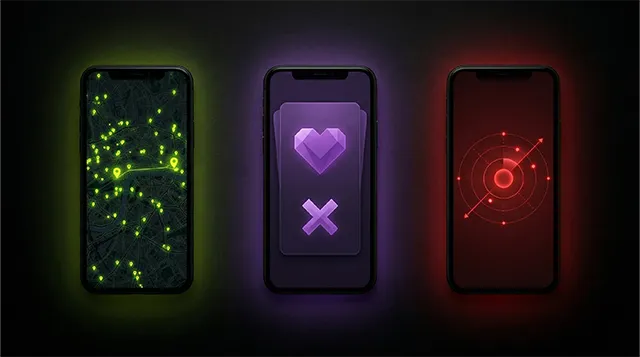
Mapdate vs Happn vs Tinder: How Map-Based Dating Compares
A side-by-side comparison of Mapdate, Happn, and Tinder. Features, pricing, how location is used, and which app is right for you in 2026.